Case Study: Exploring the Design Context of AI-Powered Services
Conference publication – HCII 2022
Project Overview
For my Master’s thesis, I explored how UX designers experience working with AI and machine learning as a design material. The work was later published and presented at the HCII 2022 Conference, contributing to the growing discussion on how AI is reshaping design practice.
My approach
To understand how UX designers experience AI and machine learning (ML) as a design material, I conducted a qualitative study based on exploratory interviews and thematic analysis.
Data collection
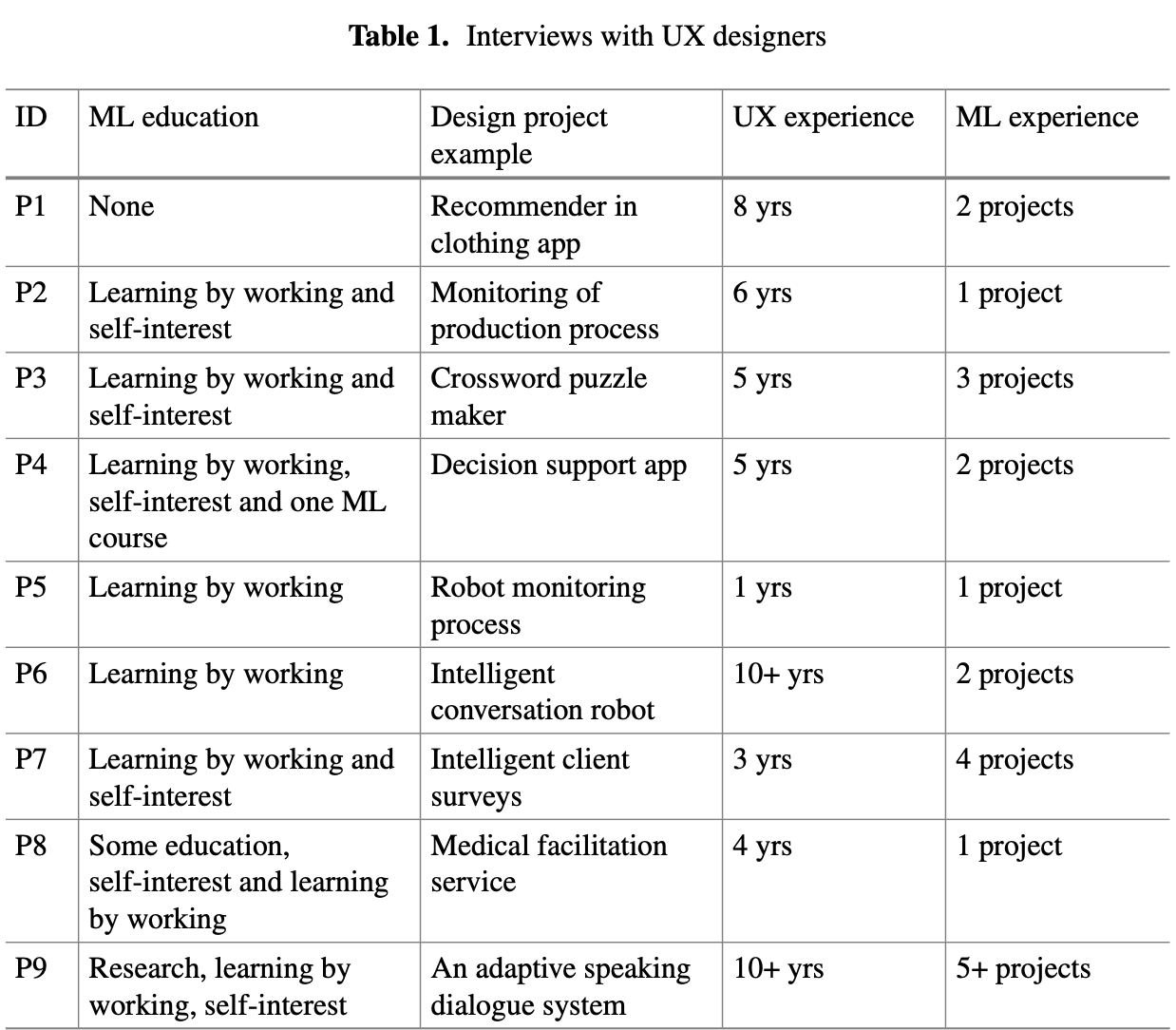
Nine professional UX designers were interviewed online via Zoom in spring 2021. Participants, recruited through multiple design agencies, all had experience integrating ML in at least one project. Interviews lasted about an hour, were audio-recorded with informed consent, and followed an open-ended, exploratory format. Example questions included:
- “How would you describe AI?”
- “How did you learn about AI in design?”
- “Could you describe the process of considering AI in digital design?”
This approach allowed for improvised follow-ups, capturing rich, authentic insights about their experiences.
Thematic Analysis Process
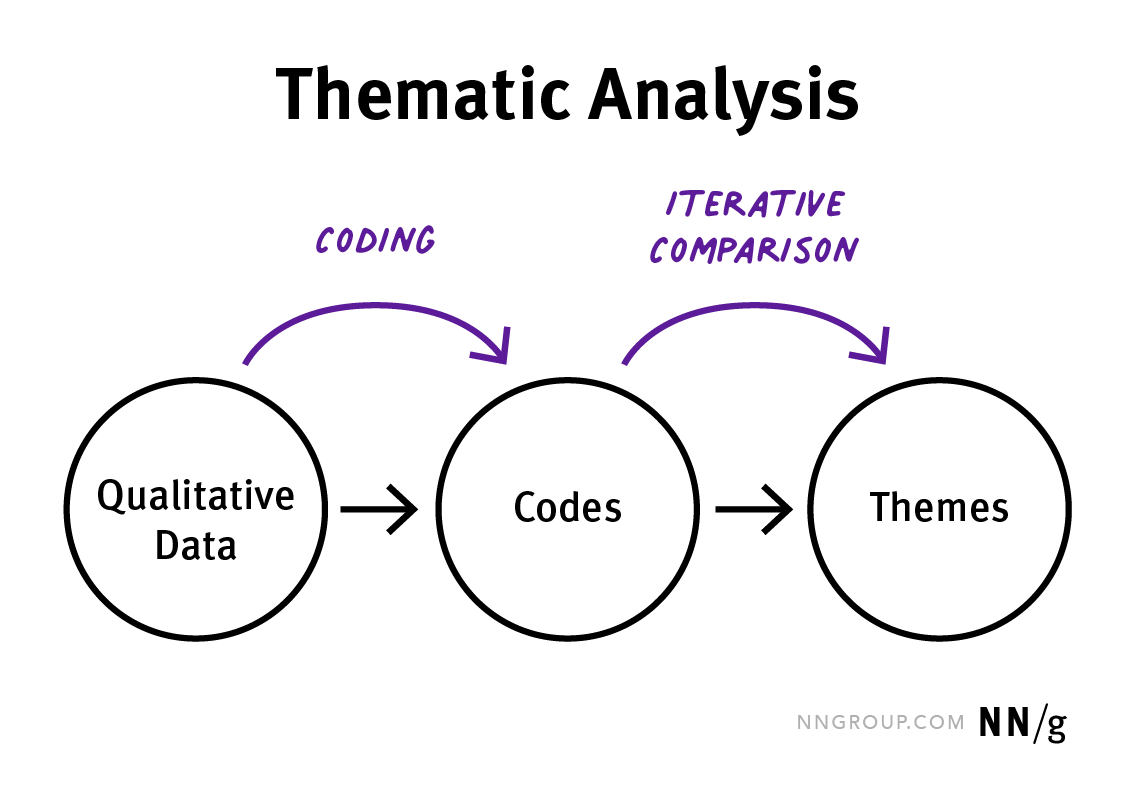
To analyze the empirical material, I applied Braun and Clarke’s thematic analysis method. This approach was well-suited for identifying and organizing patterns in a large dataset while staying close to the collected material.
The process unfolded in several steps:
- Transcription & Familiarization – I transcribed the recordings and carefully read through them to identify meaning-bearing units relevant to the research question.
- Coding – I coded the text units, focusing on semantic content without imposing theoretical interpretations. This allowed recurring patterns to emerge directly from the data.
- Categorization – Codes addressing similar issues were systematically grouped into categories (e.g., “education about ethics”). Some codes appeared in more than one category, depending on context.
- Theme Development – Through an iterative process of comparing and refining categories, I developed 45 categories, which were then synthesized into five overarching themes.
- Theme Definition – I finalized the themes by defining their essence and assigning clear, meaningful names that reflected the collected data.
The result was a set of well-defined themes that captured how UX designers experience using machine learning as a design material, providing a rich, structured understanding of the dataset.
Key Insights
I identified five recurring themes in how UX designers approach AI-powered services:
- Absence of competence → Most designers lacked formal training in ML and learned by trial, collaboration, or self-study.
- Lack of incentive for competence development → Without clear responsibility or company strategy, many didn’t invest in building ML skills.
- Challenges articulating design criteria → AI’s unpredictability made it difficult to define success, trust, and user comfort.
- Mature vs. immature clients → Designers had to adapt their process depending on the client’s digital maturity.
- Lack of support for ethical concerns → Ethical questions were often left unaddressed, handled informally in teams, or overshadowed by business pressure.
Outcome
- Published paper: Exploring the Design Context of AI-Powered Services: A Qualitative Investigation of Designers’ Experiences with Machine Learning (HCII 2022).
- Contribution: Provided practical insights for design practice on how to approach AI as a new design material, highlighting gaps in education, tools, and ethical frameworks.
Impact
- For the design community: Helped frame AI/ML as a design material with its own challenges and opportunities.
- For myself: Strengthened my skills in complex documenatation, qualitative research, synthesis, and translating complex technology into design practice. This project sharpened my ability to uncover patterns, communicate insights clearly, and balance innovation with ethics, all of which I now bring into my professional UX work.
Want to know more?


Case Study: Exploring the Design Context of AI-Powered Services
Conference publication – HCII 2022
Project Overview
For my Master’s thesis, I explored how UX designers experience working with AI and machine learning as a design material. The work was later published and presented at the HCII 2022 Conference, contributing to the growing discussion on how AI is reshaping design practice.
My approach
To understand how UX designers experience AI and machine learning (ML) as a design material, I conducted a qualitative study based on exploratory interviews and thematic analysis.
Data collection
Nine professional UX designers were interviewed online via Zoom in spring 2021. Participants, recruited through multiple design agencies, all had experience integrating ML in at least one project. Interviews lasted about an hour, were audio-recorded with informed consent, and followed an open-ended, exploratory format. Example questions included:
- “How would you describe AI?”
- “How did you learn about AI in design?”
- “Could you describe the process of considering AI in digital design?”
This approach allowed for improvised follow-ups, capturing rich, authentic insights about their experiences.
Thematic Analysis Process
To analyze the empirical material, I applied Braun and Clarke’s thematic analysis method. This approach was well-suited for identifying and organizing patterns in a large dataset while staying close to the collected material.
The process unfolded in several steps:
- Transcription & Familiarization – I transcribed the recordings and carefully read through them to identify meaning-bearing units relevant to the research question.
- Coding – I coded the text units, focusing on semantic content without imposing theoretical interpretations. This allowed recurring patterns to emerge directly from the data.
- Categorization – Codes addressing similar issues were systematically grouped into categories (e.g., “education about ethics”). Some codes appeared in more than one category, depending on context.
- Theme Development – Through an iterative process of comparing and refining categories, I developed 45 categories, which were then synthesized into five overarching themes.
- Theme Definition – I finalized the themes by defining their essence and assigning clear, meaningful names that reflected the collected data.
The result was a set of well-defined themes that captured how UX designers experience using machine learning as a design material, providing a rich, structured understanding of the dataset.
Key Insights
I identified five recurring themes in how UX designers approach AI-powered services:
- Absence of competence → Most designers lacked formal training in ML and learned by trial, collaboration, or self-study.
- Lack of incentive for competence development → Without clear responsibility or company strategy, many didn’t invest in building ML skills.
- Challenges articulating design criteria → AI’s unpredictability made it difficult to define success, trust, and user comfort.
- Mature vs. immature clients → Designers had to adapt their process depending on the client’s digital maturity.
- Lack of support for ethical concerns → Ethical questions were often left unaddressed, handled informally in teams, or overshadowed by business pressure.
Outcome
- Published paper: Exploring the Design Context of AI-Powered Services: A Qualitative Investigation of Designers’ Experiences with Machine Learning (HCII 2022).
- Contribution: Provided practical insights for design practice on how to approach AI as a new design material, highlighting gaps in education, tools, and ethical frameworks.
Impact
- For the design community: Helped frame AI/ML as a design material with its own challenges and opportunities.
- For myself: Strengthened my skills in complex documenatation, qualitative research, synthesis, and translating complex technology into design practice. This project sharpened my ability to uncover patterns, communicate insights clearly, and balance innovation with ethics, all of which I now bring into my professional UX work.
Want to know more?

